



Python skills on the racetrack: how a teen developer helped build an award-winning electric car
What happens when a student's code ends up inside a real electric racing car

A Kodland graduate joined an electric vehicle engineering team, applied Python and software skills to a real competition, and helped his team win 2nd place in Turkey's Performance category at Teknofest 2025.
Most students learn to code by building apps and games. Some of them go further.
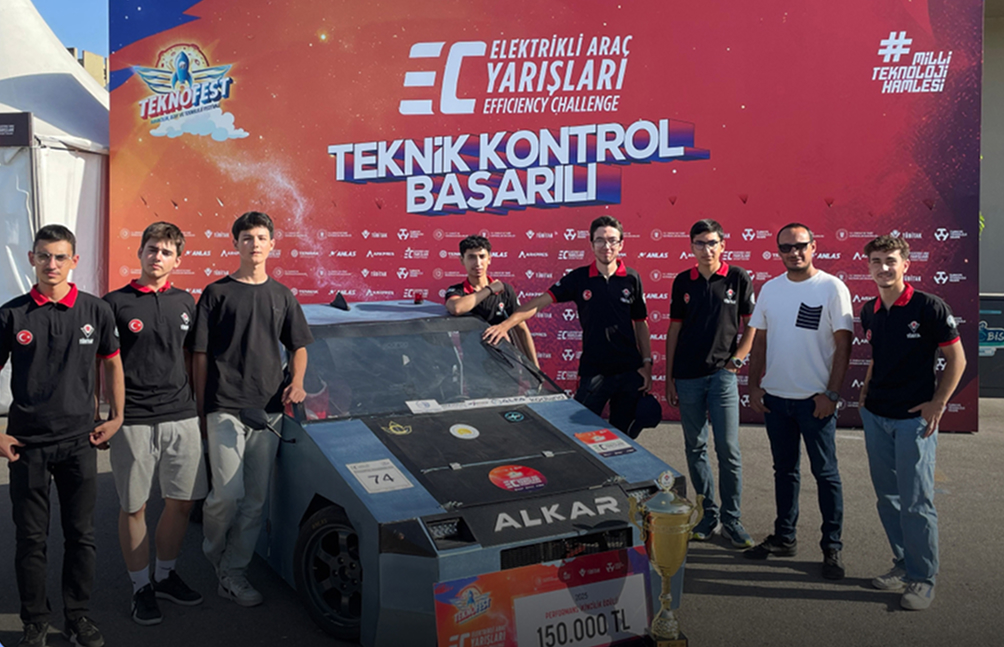
At Teknofest 2025 — one of the world's largest aviation, space, and technology festivals — a team of young engineers raced a fully electric car they had designed and built themselves. On the software team: a Kodland Turkey graduate who had learned Python in our courses and brought those skills directly into a real engineering project.
Their car ALKAR finished 2nd in the Performance category across Turkey, winning a 150,000 TL prize.
Building an electric racing car: where software becomes critical
The KUARA team competed in the Teknofest International Efficiency Challenge Electric Vehicle Races. Teknofest is the world's largest aerospace and technology festival, organized annually in Turkey by the Turkish Technology Team Foundation (T3 Foundation) and the Ministry of Industry and Technology. The 2025 edition hosted competitions across 52 categories, drawing participants from more than 100 countries.
The Efficiency Challenge puts electric vehicle teams head-to-head under real race conditions — judged on engineering precision, energy efficiency, and technical performance. Before reaching the track, every car must pass a rigorous technical inspection. ALKAR passed.
What most people don't think about when they picture an electric car is how much of it runs on software. An electric vehicle is a network of electronic systems — motor control, sensor processing, energy management, safety logic. Every one of those systems needs code. And that code needs to work reliably at speed, under load, with no margin for error.
A trial lesson at Kodland — book a free class!
Python programming in action: from course projects to real engineering
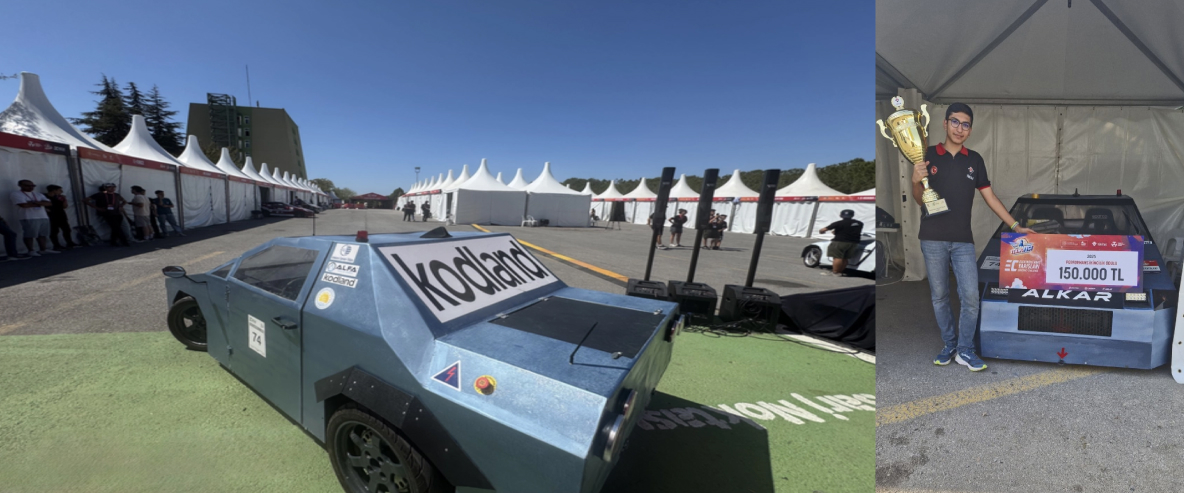
The Kodland graduate on the team worked in exactly that area — software development for the vehicle's electronic systems. The skills he applied: Python and Unity, both learned through Kodland courses.
"The software training I received from Kodland greatly improved my coding and software development skills. When building a car, software is one of the most important elements — it's an electric vehicle with intensive electronics, so the software part is critically important."
İlker Koçer, Kodland Turkey graduate
This is what the progression from course project to real-world application actually looks like. In Kodland's Python Start course (ages 10+), students learn to write structured code — loops, functions, data processing, building systems that respond to conditions and inputs. In Python PRO (ages 13+), they work with data analysis, AI integration, and finish with a full hackathon project solving a real-world problem.
Those same skills — reading sensor input, processing data, writing reliable logic — are exactly what software engineers build into electric vehicles. The gap between a well-taught Python course and a real engineering contribution is smaller than it looks.
The result: 2nd place in Turkey's Performance category
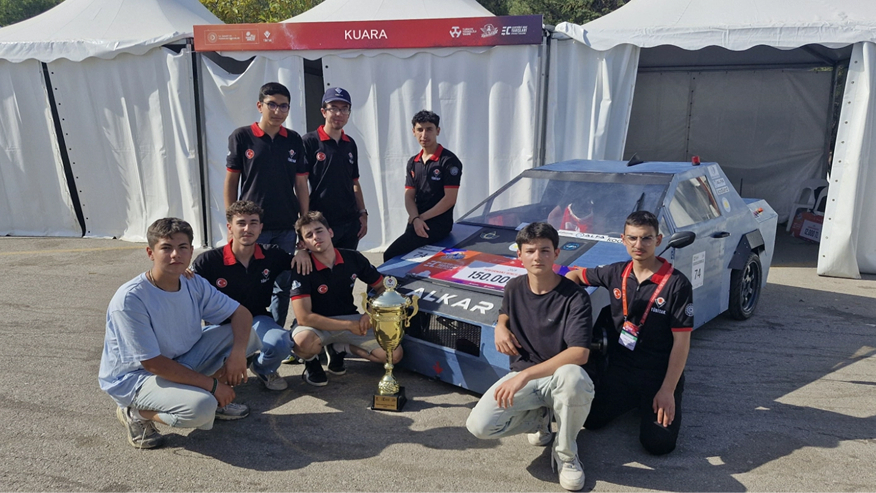
The KUARA team won 2nd place in the Performance category at Teknofest 2025, taking home a 150,000 TL prize.
That result came from months of engineering work across a full team — mechanical, electrical, and software. It's also a clear example of what becomes possible when students build real skills, apply them consistently, and take them into contexts well beyond the classroom.
We're proud to have supported the KUARA team — and to see what a Kodland graduate can build when given the tools and the chance.
Want to find out where your child could take their skills? Sign up for a free trial lesson.