


NASA Space Apps Challenge: what it is and which skills help kids compete
From Python to 3D design — the skills that win hackathons

Every October, tens of thousands of people across 160+ countries spend 48 hours solving real problems NASA actually cares about. In 2026, Kodland joins as an official Amplification Collaborator. Here is what the challenge is and which skills make the difference.
Every October, tens of thousands of people across 160+ countries spend 48 hours solving real problems NASA actually cares about. Scientists, engineers, designers, students, storytellers — and some are teenagers with a laptop and an idea that ends up winning a global award.
This is the NASA International Space Apps Challenge: the largest annual global hackathon in the world. In 2026, Kodland joins as an official Amplification Collaborator.
Teams of up to 6 people choose one challenge and have 48 hours to build something: an app, a tool, a game, a data visualization, a story. Local winners advance to global judging, evaluated by NASA scientists and space agency experts. The numbers speak to how fast this community has grown: 93,520 participants in 2024 became more than 114,000 in 2025, across 167 countries and 551 local events, with over 11,500 projects submitted in a single weekend.
The best way to understand Space Apps is to look at what winning teams built — and what skills it took. The answer is never just one. Every winning project combined technical ability with visual thinking, data literacy, or storytelling.
Python and the ability to automate
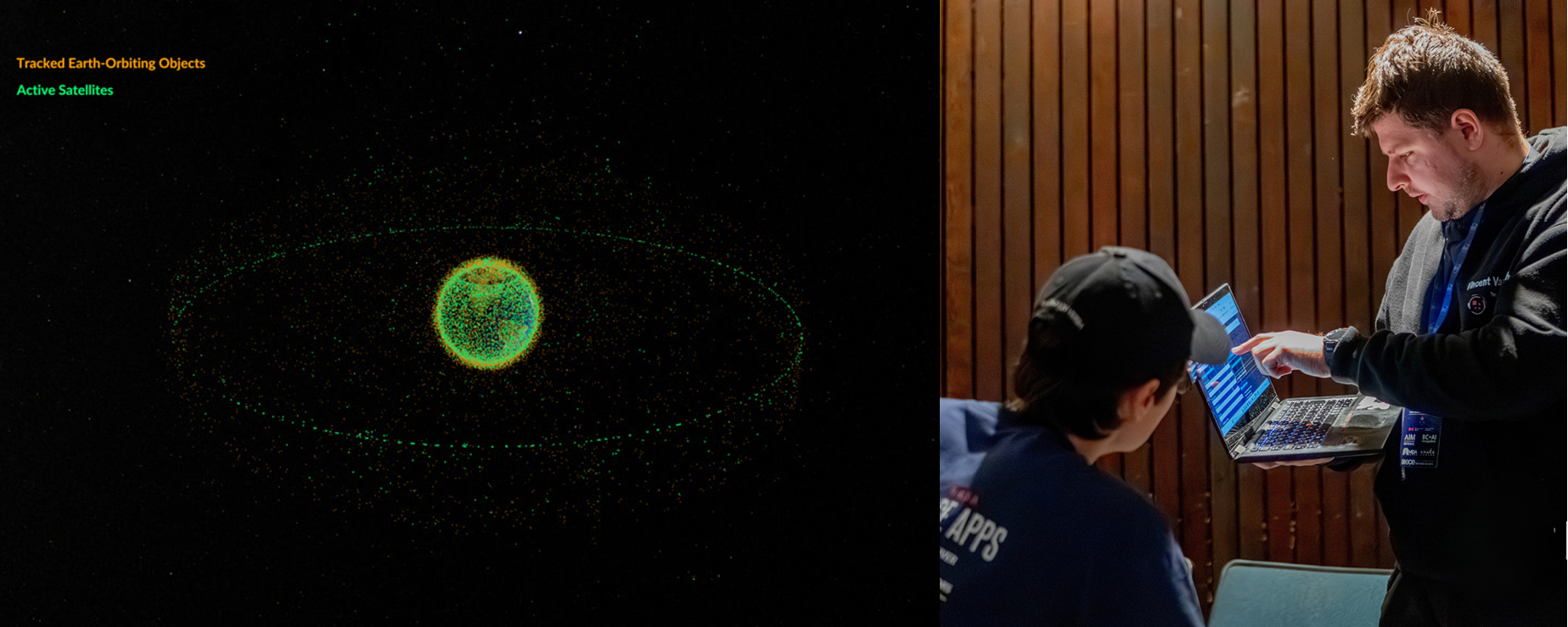
In 2024, a team from Canada called WMPGang built SkyShield — a web application that tracks near-Earth objects and meteor streams in real time to identify satellite collision risk zones. In 2025, team Astro Sweepers went further: they built an end-to-end orbital debris compliance platform that automatically ingests public orbital data and generates risk assessment reports — the kind of automation that saves engineers hours of manual work.
Both projects started with the same foundation: Python. Variables, loops, functions, working with structured data — the building blocks that eventually become data pipelines, APIs, and machine learning models.
In Kodland's Python Start course (ages 10+), students build exactly this progression — from their first lines of code to interactive programs, then working with lists, functions, and data structures. Projects along the way include a virtual assistant, a competitive game, and a bot that runs live. The Minecraft Programming LVL2 course (ages 10–11) takes a different path to the same skills: students write actual Python inside Minecraft, controlling an Agent that builds structures, analyzes terrain, uses coordinates, and responds to conditions. The game context is genuine, and the code is real.
Want to find out whether coding clicks for your child? Sign up for a free trial lesson and see where it leads.
AI and data thinking
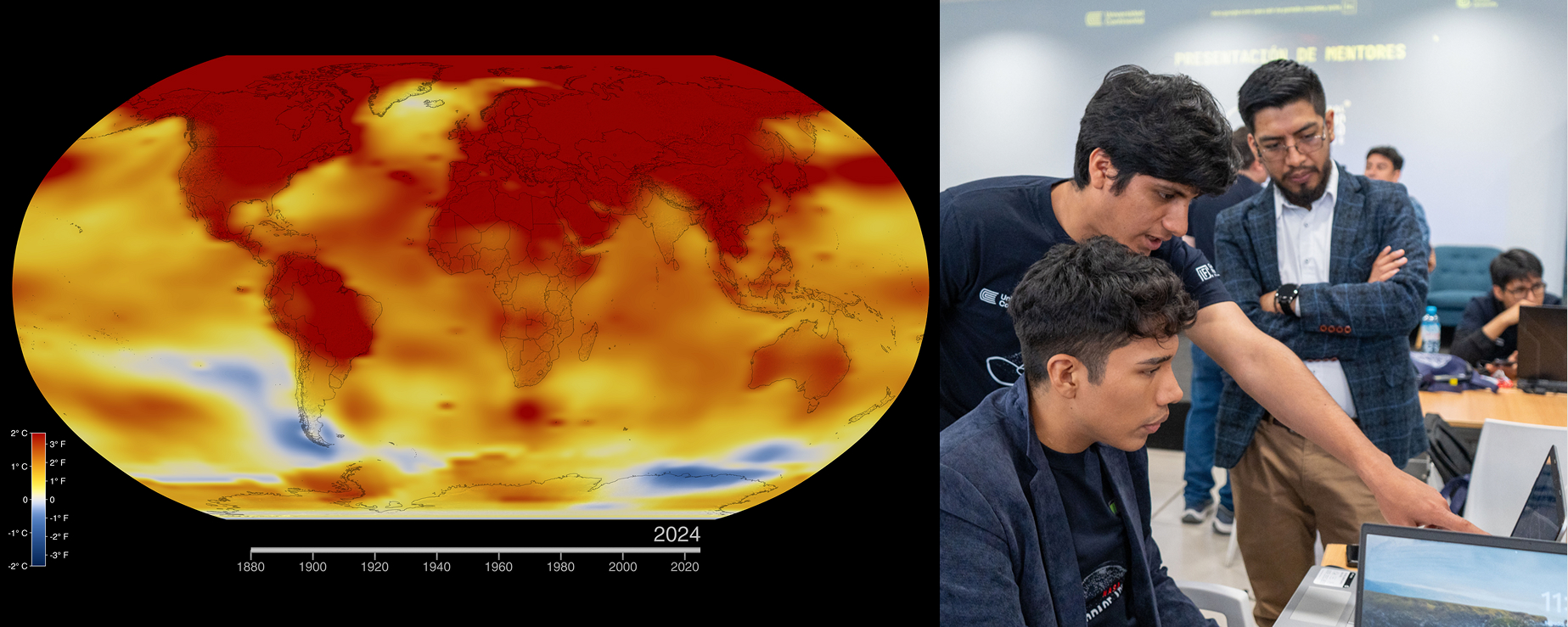
TerraTales from Egypt built a web app that traced how climate change affects three different regions — Egypt, Brazil, and Germany — through data visualizations, an AI-powered forecasting model, and an interactive game. In 2025, team SpaceGenes+ from Germany created an interactive dashboard that helps researchers understand how radiation and microgravity together affect astronaut health — pulling from biology datasets and applying machine learning to find patterns across conditions.
These projects did not require a research background. They required students to understand what a dataset is, how to clean and structure it, and how to train a model that improves with more data.
Kodland's Python PRO course (ages 13+) covers this territory directly. Students learn to extract and clean data from open sources, train computer vision models in Google Colab, and integrate AI into apps they have already built. The course ends with a hackathon: students are given a real-world problem — building a technical solution to global warming — and 4 lessons to plan, develop, test, and present it. That is not preparation for Space Apps. That is the same format.
3D visualization and spatial design

Team Connected Earth Museum from Brazil won the Art & Technology award for a virtual museum where an AI host guides visitors through 3D and 2D visualizations of Earth's temperature changes, wildfires, and population density over time. Data as a place you move through, not a table you scroll past.
The 3D thinking behind that kind of project is a learnable skill. In Kodland's 3D Modelling in Blender course (ages 13+), students build environments, animate characters, apply physics simulations, and use AI-generated references and PBR textures to create fully developed scenes. They graduate with a Behance portfolio of original work. The spatial problem-solving in every lesson — constructing a location, rigging a character, rendering a final scene — is exactly the thinking that helps teams turn data into something audiences can actually experience.
A trial lesson at Kodland — book a free class!
Game-based interactive tools
Innovisionaries from the UAE won the Most Inspirational award for Eco-Metropolis, a city-building game where players make urban planning decisions using real environmental data. Players felt the consequences of their choices. Judges could play it, not just evaluate it. TerraTales embedded an interactive game inside a climate story for the same reason: engagement through interaction.
Game development teaches students how to think about a user's experience from the very first design decision — what happens when someone clicks, what feedback do they get, how does the system respond.
In Kodland's Roblox Game Developer course (ages 8–12), students build original games in Roblox Studio — a racing game, an adventure game with NPCs and dialogue, a multiplayer project with an in-game economy — and publish them online. In Roblox PRO (ages 10–14), students work on more complex mechanics: Tower Defence, multiplayer round logic, DataStore-based save systems, and monetization.
These are complete projects built from scratch and tested under real conditions. The experience of taking an idea from nothing to a working interactive product — and then demonstrating it to a group — maps directly to what Space Apps teams do in 48 hours.
Storytelling and visual communication
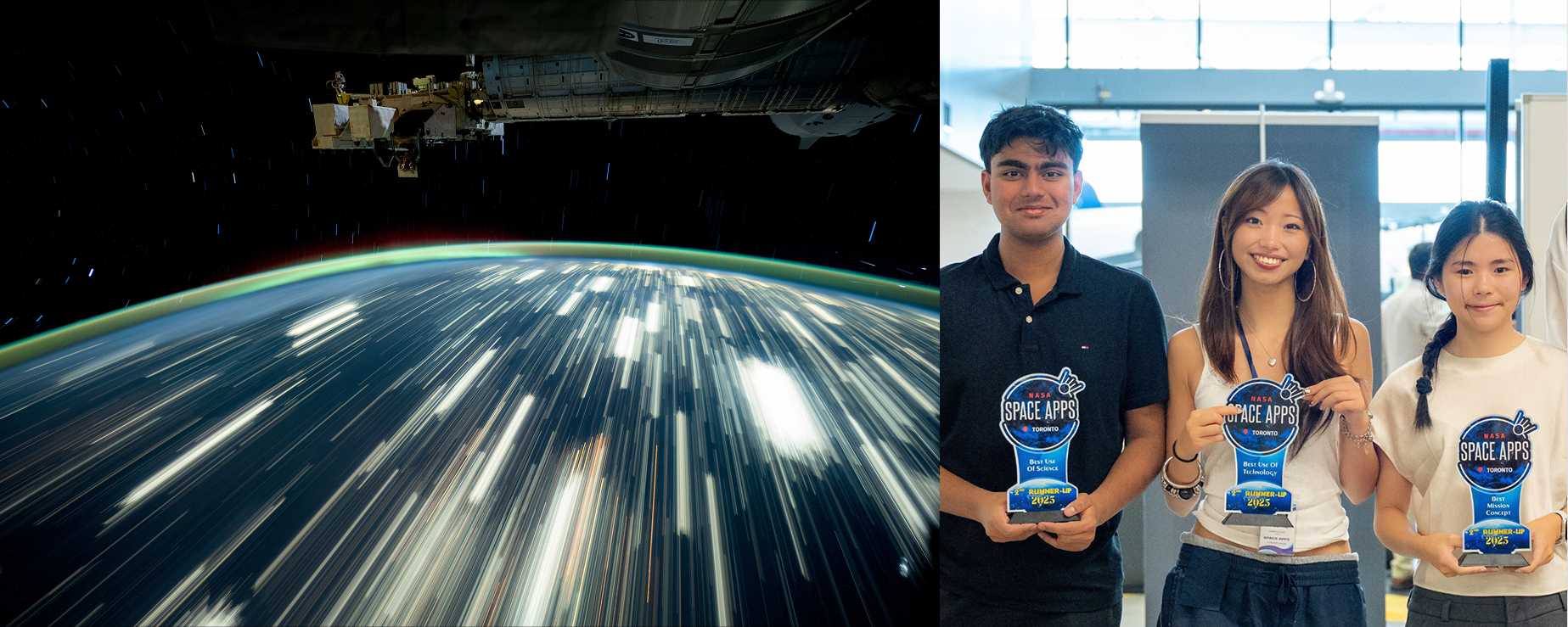
The Best Storytelling award exists at Space Apps because NASA knows that a solution nobody can understand is not a useful solution. TerraTales did not just build a functional tool — they told a story about three places and the people living the consequences of climate change. The data was held inside a narrative that made it matter to someone who was not already a climate scientist.
Visual storytelling is a learnable skill. In Kodland's Digital Creativity course (ages 8–9), students work through pixel art, frame-by-frame animation, keyframe animation, comic creation, and video editing with voiceover. One module takes place in space: students model planets, spaceships, and characters in 3D, building the visual vocabulary to communicate ideas without relying on text. A student who learns to think visually at 9 brings that into their Python projects, their games, and eventually their hackathon presentations.
Sign up for a free trial lesson — a tutor gets to know your child, understands what interests them, and suggests where to start.
About Kodland
Kodland is an online learning platform where children ages 8–17 build digital skills through live, project-based courses. Students work in small groups with experienced tutors and apply new concepts in every lesson through real projects — games, bots, animations, 3D models, web apps. By the end of a course, each student has a portfolio of work they built themselves.
Ready to join NASA Space Apps 2026?
The 2026 NASA Space Apps Challenge runs on November 14–15, 2026. Registration is open now at spaceappschallenge.org until November 13. More than 450 local events are confirmed across 163 countries, alongside a virtual Universal Event. Specific challenge statements will be announced on September 17.
Teams of up to 6 people. 48 hours. NASA's open data. No minimum age. Participants under 18 need parental consent to register.